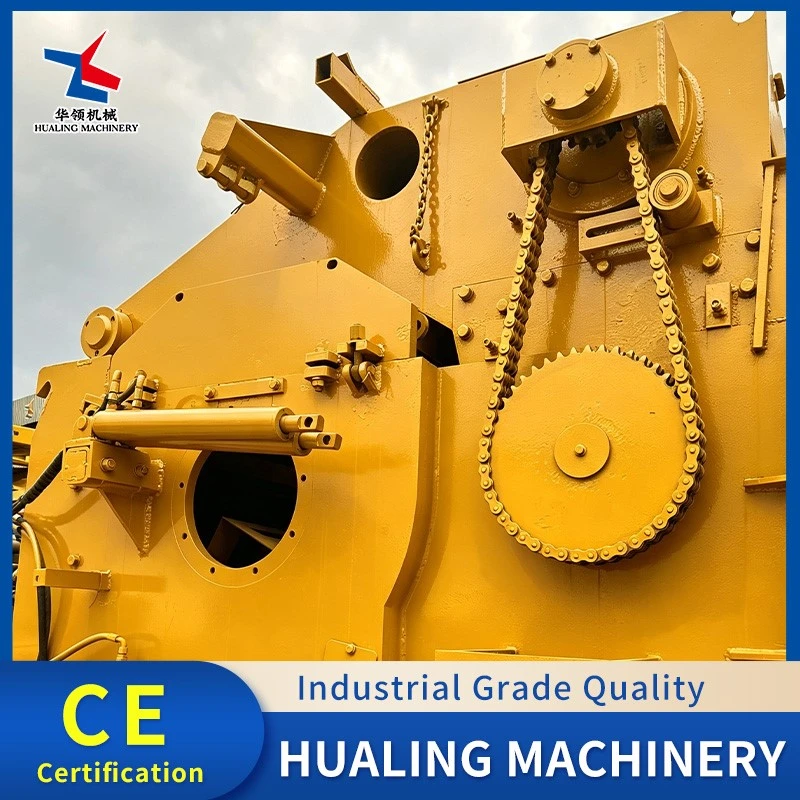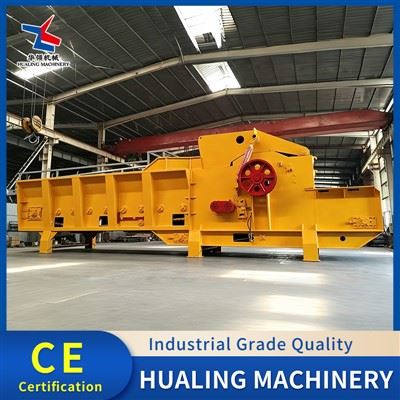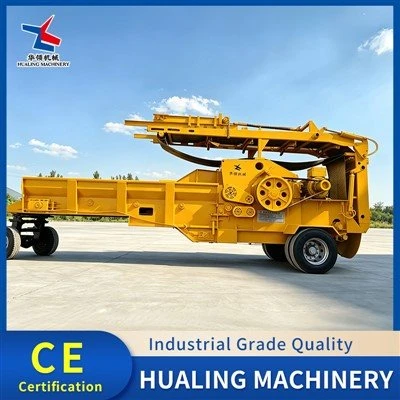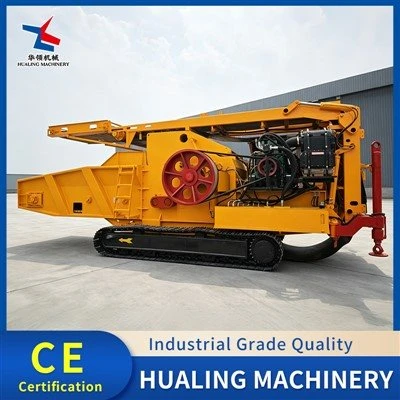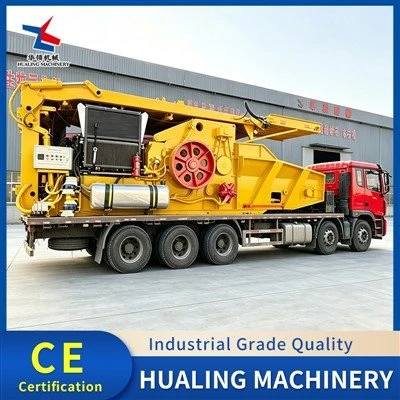

A complete fully automatic tire shredder is not a single component, but rather an integration of multiple precisely cooperating systems.
Feeding System: Responsible for the orderly and continuous transport of haphazardly piled waste tires to the main shredder. It typically uses belt conveyors or chain conveyors and can be equipped with an automatic material leveling device to ensure uniform feeding and prevent overloading of the main unit.
Main Shredder System: This is the heart of the equipment. It includes a robust frame, a high-torque drive motor (or diesel engine), a gearbox, a rotor assembly (including moving blades), a fixed blade holder, and a well-sealed crushing chamber. The material, hardness, geometry, and arrangement of the blades directly determine the crushing efficiency, finished product quality, and blade life.
Sorting System: The crushed mixture contains rubber particles, steel wires, and fibers. The sorting system typically includes a magnetic separator and an air separator. The magnetic separator uses powerful magnetic rollers to adsorb and separate ferromagnetic steel wires; the air separator, based on the differences in the aerodynamic properties of rubber, fibers, and air, adjusts the airflow to blow away lightweight fibrous materials, thus obtaining pure rubber particles.
Dust Removal System: A large amount of dust is generated during the crushing process. A highly efficient dust collection system (such as a pulse jet baghouse dust collector) is crucial. It effectively collects fine dust, ensuring the working environment meets environmental protection requirements and protecting the health of operators.
Control System: The core of full automation. Centralized control is achieved using a programmable logic controller (PLC) and a human-machine interface (touchscreen). Operators can easily set parameters, monitor operating status (such as current, temperature, and vibration), and diagnose faults. The system features automatic overload protection and emergency shutdown functions to ensure safe and stable equipment operation.